When you part with interior materials on a closure or renovation, most people hesitate over one question: “Will this sell, or do I just throw it away?” The answer depends on the item and its condition — but restaurant interior materials qualify for buyback far more often than people expect.
This article sorts out, item by item, what sells, what’s hard to sell and what won’t sell — covering fittings, furniture, fixtures, décor and equipment — along with the factors that drive your valuation and the preparation to do before an on-site assessment. (For the big picture, see the complete buyback guide.)
By item: what sells, what’s hard to sell, what won’t
Here’s the broad rule of thumb. The more it is movable, still usable and in demand, the easier it sells; fixed built-ins, badly damaged items and non-reusable goods are harder.
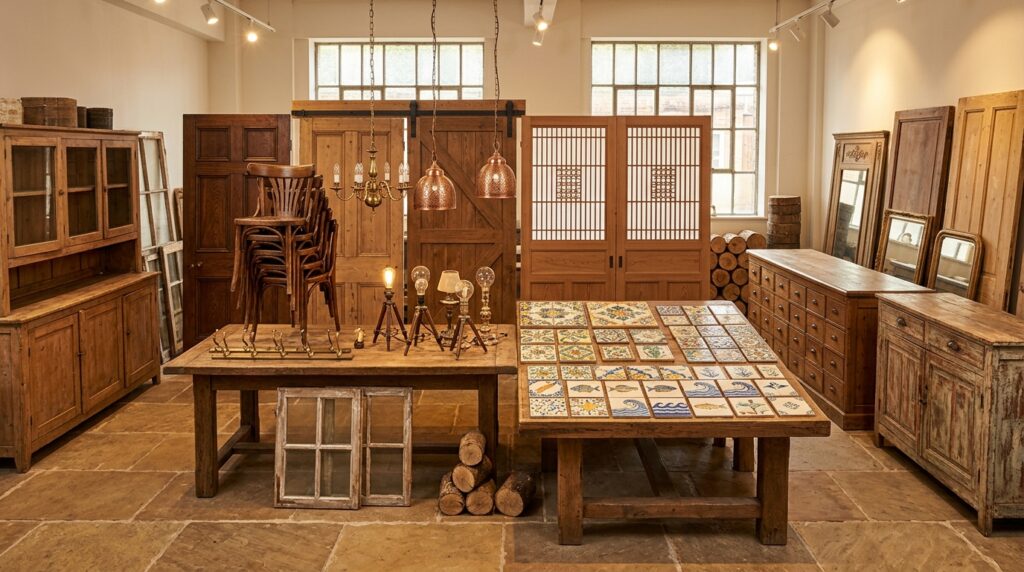
- Fittings and building materials (sell well): doors, sliding doors, transoms and lattice screens, counters, partitions and screens, and materials such as pillars and beams. Solid or reclaimed wood and design-led pieces are in particular demand.
- Furniture (sells well): chairs, tables, sofas, stools, low tables, counter chairs. A matched quantity helps.
- Fixtures and storage (sell well): showcases, till counters, shelving of all kinds, pantry units, Japanese chests, office equipment.
- Décor, folk antiques and antiques (valued for design): folk antiques, ornaments, paintings and wall art, antique furniture, signage, foliage plants. One-of-a-kind and rare pieces can be valued highly.
- Lighting (sells well): chandeliers, pendants and so on. A lighting test helps.
- Fixtures/equipment (accepted): grease traps, hoods, exhaust and pressure fans, taps and related fittings. Their removal and pipe-disconnection state affect the valuation.
- Kitchen equipment (accepted — a note): we can handle buyback, but our focus is fittings, furniture, fixtures, décor and equipment such as the above. For appliances, please check with us first on eligibility.
Hard to sell / won’t sell: large built-ins fixed to walls or floors, badly damaged, rotten or mouldy items, anything with an outstanding lease balance, non-reusable goods such as curtains whose flame-retardant rating has lapsed, and heavily soiled items.
The six factors that drive your valuation
Even the same item is valued differently by the following factors. Check them yourself before you part with anything and the conversation goes faster — and higher.
- Condition: scratches, wobble, rust, smell, dirt. Even a clean-up changes the impression.
- Age / generation: newer helps. Some items (folk antiques, antiques) offset age with design and rarity.
- Maker, brand, material: established commercial makers and solid wood value more easily.
- Accessories: whether shelves, screws, assembly parts, remotes and the like are all present.
- A matched quantity: a lot such as “twenty of the same chair” resells easily and helps.
- Ease of removal and carry-out: the carry-out route (doorway, stairs, lift) and whether it’s fixed. The easier to move out, the better it reflects in the valuation.
Pre-assessment checklist
- Take photos: a few of the whole item plus any notable damage. Photo valuation gives a quick estimate.
- Count quantities: list the items and counts — X chairs, X tables.
- Clean up: remove dust and grease.
- Gather accessories: keep shelves, parts and remotes with the item.
- Test operation: check lighting, exhaust and pressure fans and so on while the power and water are still live.
- Confirm ownership: sort out leases, leftover property and built-ins (details in the complete guide).
[Comparison] Ease of sale × valuation points, by item
| Item group | Ease of sale | What the valuation looks at |
|---|---|---|
| Fittings & materials (doors, counters, pillars, screens) | High | Frame or door-only, solid/reclaimed wood, design, size, warping |
| Furniture (chairs, tables, sofas) | High | Matched quantity, material/brand, condition |
| Fixtures & storage (showcases, shelving, chests) | High | Size, accessories such as adjustable shelves, function (e.g. refrigerated) |
| Décor, folk antiques, antiques | Depends on design | One-of-a-kind, rarity, maker, condition |
| Lighting & chandeliers | Medium–high | Lighting test, design, accessories (bulbs/canopy) |
| Fixtures/equipment (grease trap, hood, taps) | Medium | Condition, size, state of removal/disconnection |
| Large fixed built-ins | Low | Whether it can be removed / relocated intact |
Unsure? Start with a photo
Even for items you’re unsure about, sending a photo quickly tells you whether they’re eligible. Tenpos Kawaguchi buys back everything from fittings, furniture, fixtures and décor to equipment, from a single item to a whole restaurant. Valuation and consultation are free, with on-site pickup by large truck.
Request a buyback valuation → Read the complete buyback guide →