Column
Tips and know-how on used materials, DIY, working with craftsmen and buyback — posted regularly.
Facility standards for restaurants in Japan are set by local ordinance, based on Appended Table 19 of the Ordinance for Enforcement of the Food Sanitation Act. For sinks, hand-washing facilities, floors, walls and ceilings, and ventilation and lighting, we explain what the national standard says and doesn’t say,…
In Japan, a restaurant business permit is issued after you review your plans with the public health centre before construction, apply with the documents and fee before opening, and pass an on-site inspection of the finished restaurant. Based on Kawaguchi City’s guidance, we explain the six steps, the…
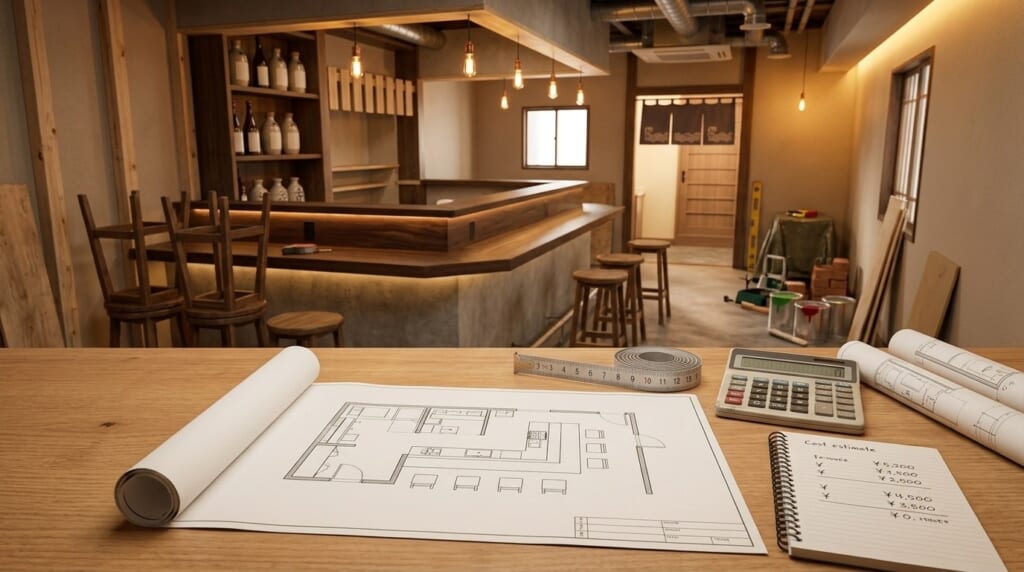
A 5-tsubo restaurant (about 16.5 m²) has room for roughly 4 to 12 seats once the kitchen, toilet and changing space are in place. We give a seat-count table based on the Tenpos Group’s opening-support formula, which restaurant types suit a small space, the health and fire requirements…
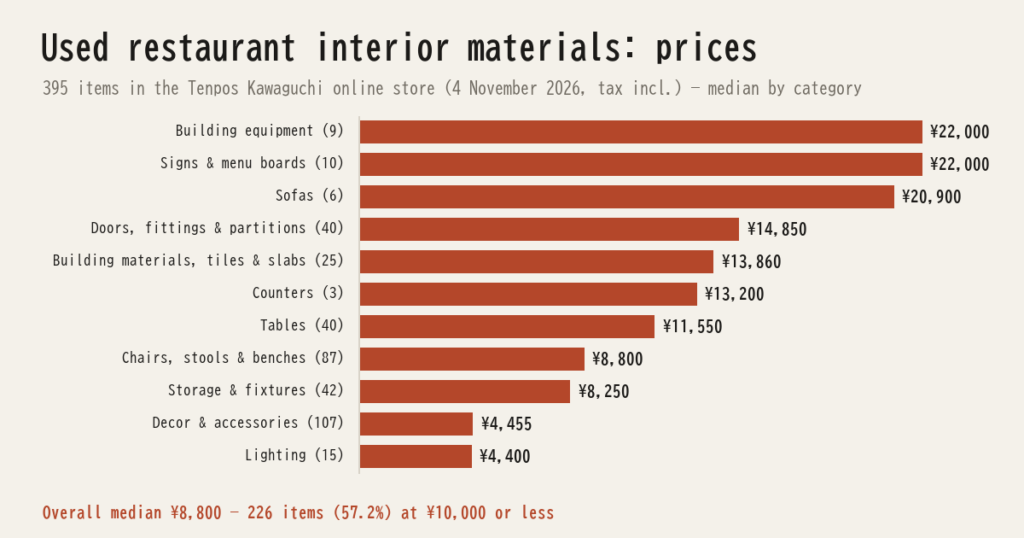
We analysed all 395 used interior items listed in our Kawaguchi online store (4 November 2026, tax included): over half cost ¥10,000 or less and the median is ¥8,800. Price ranges by category, shipping trends and a dining-area estimate.
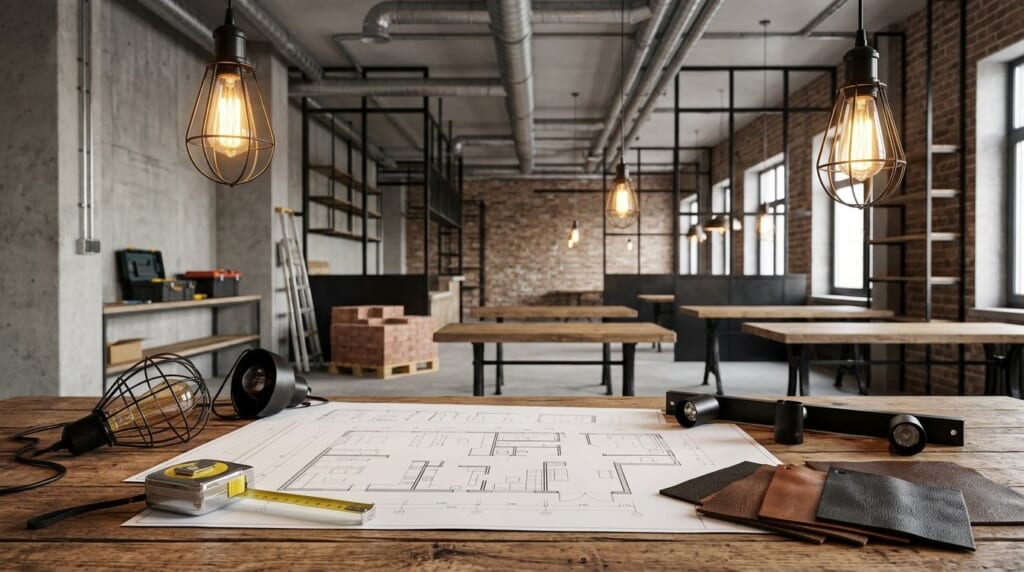
An industrial-style café is built from a few elements (black metal, weathered wood and exposed lighting), which makes it easy to create with used materials. We explain how to choose lighting, chairs and tables, floors and ceilings, with a sample budget for 20 seats based on median prices…
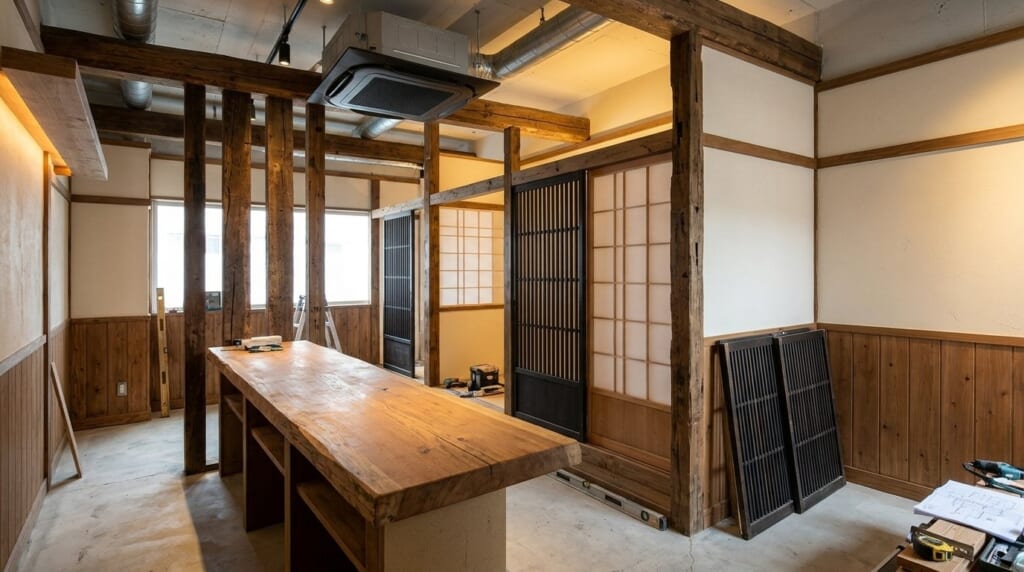
A restaurant with the feel of a traditional Japanese house or a modern Japanese look can be created in an ordinary tenant unit by focusing used lattice doors, shoji and solid timber on the entrance, partitions and counter. We cover where to use them, where Japan’s interior finish…
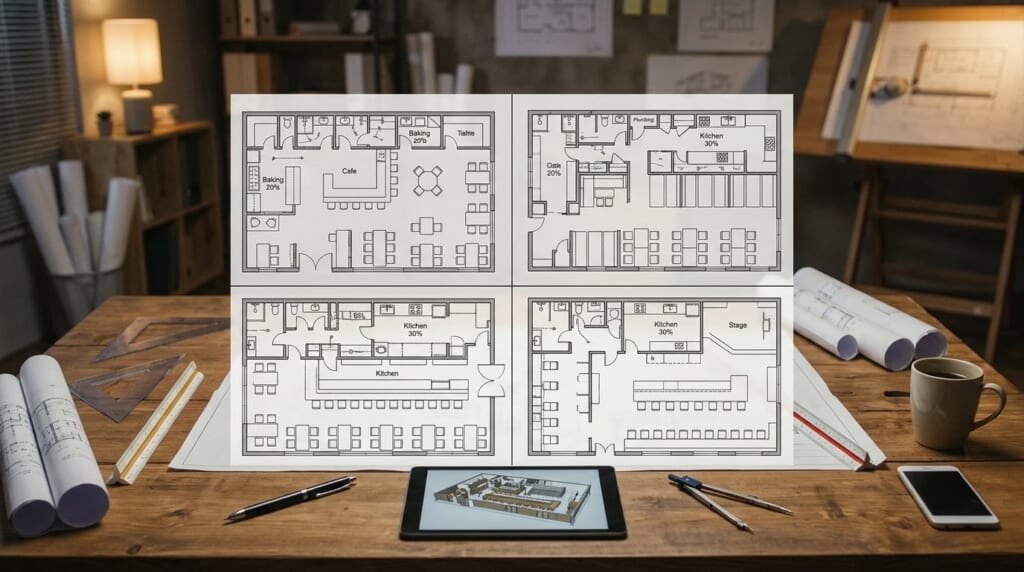
A restaurant’s fit-out changes with its type: kitchen share, floor finishes, ventilation, seating and legal conditions all differ. We compare cafés, izakaya, ramen shops and bars in a table based on the Tenpos Group’s startup support site and the regulations under Japan’s Food Sanitation Act and Entertainment Business…
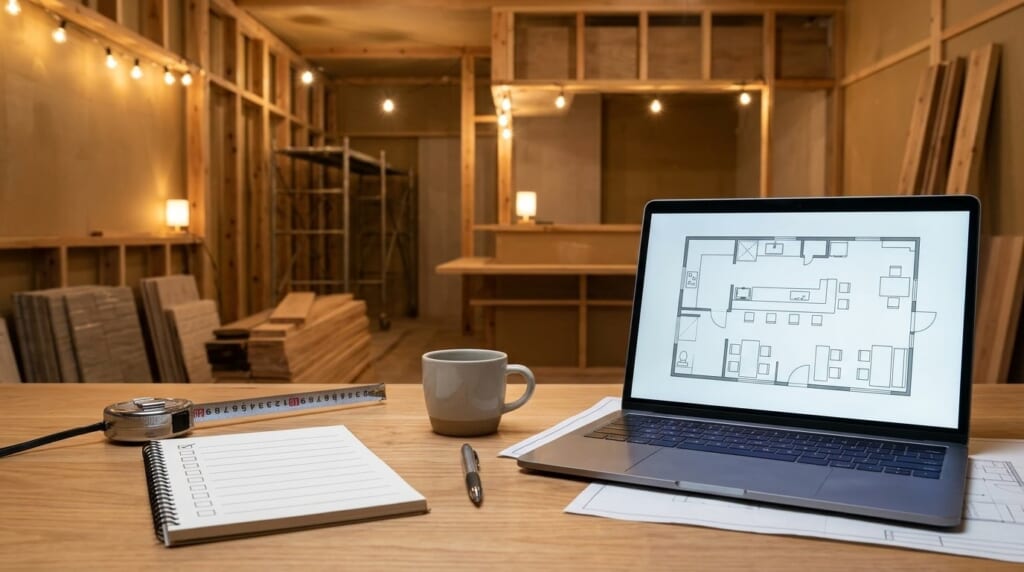
A quick-reference table of what you can do yourself when opening a restaurant in Japan and what needs a qualification or professional, split into paperwork, works, sourcing and promotion. You can file the business licence application, fire department notice and notice of commencement yourself, while someone at the…
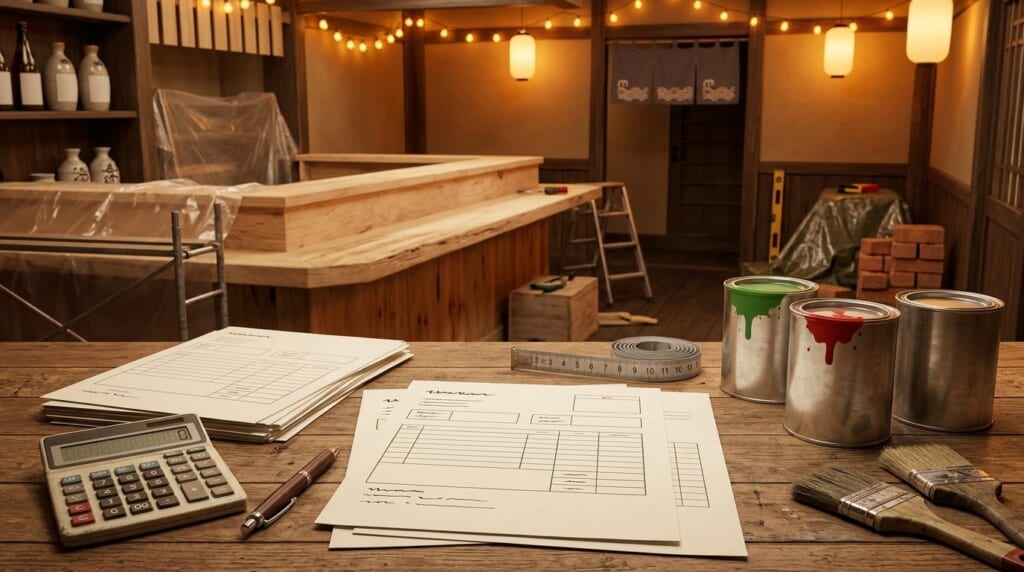
For a Japan Finance Corporation startup loan, you need quotes when you apply for capital costs. Based on the JFC’s guidance, we explain how to gather quotes for a plan that includes used materials, DIY materials and craftsmen for part of the work, and how to match them…
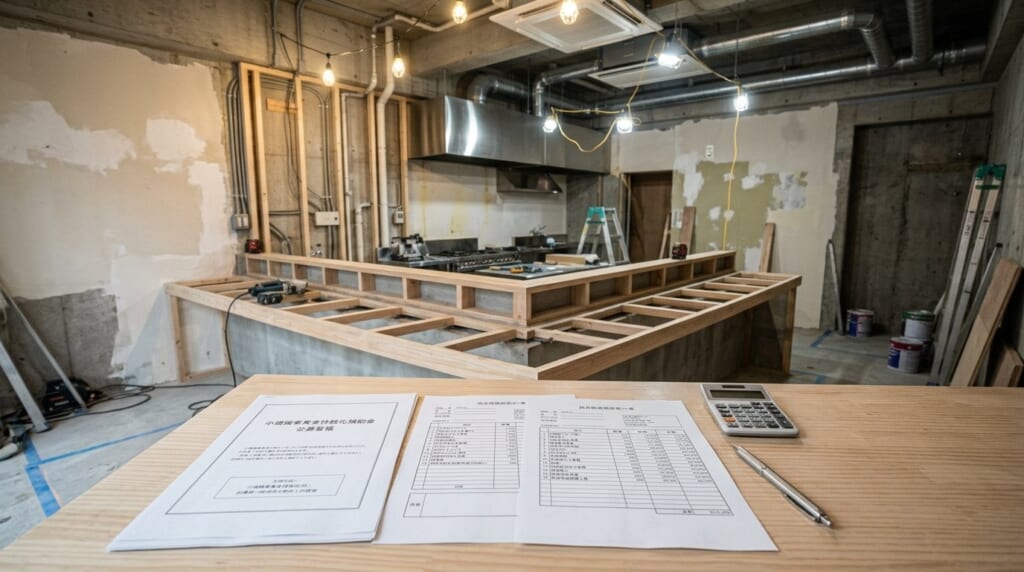
Japan’s Small Business Sustainability Subsidy can cover restaurant refits, but both the general and startup types require you to be trading when you apply, so it can’t pay for the fit-out before opening. Based on the application guidelines current in November 2026, we cover when a refit after…
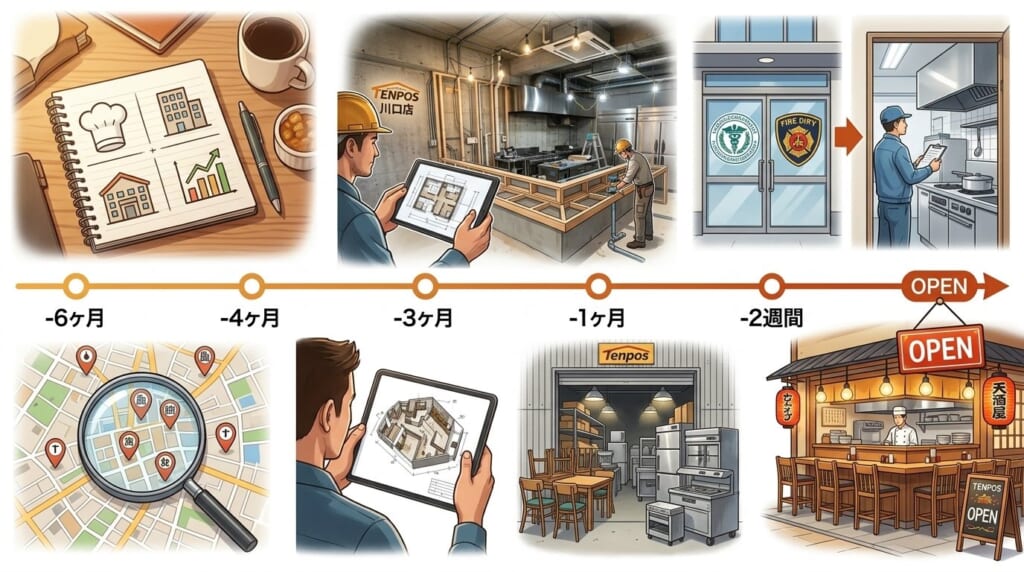
Plan a restaurant opening by fixing the opening day first, then working back from the deadlines for permits and the time the fit-out takes. Using guidance from Kawaguchi City’s public health centre and fire department as an example, we set out a six-month schedule, the order of permits…
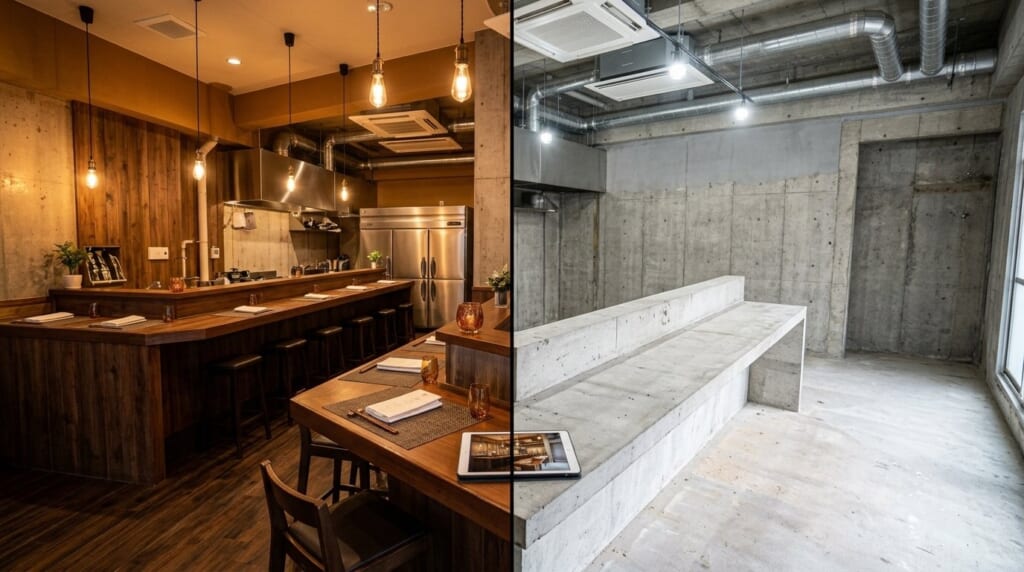
Whether a second-hand restaurant space or a shell unit suits you depends on the previous business, the kitchen layout, and the capacity and condition of the services. A checklist for deciding, what to check before paying for the previous tenant’s fit-out, how to assess leftover equipment, and how…